.png)
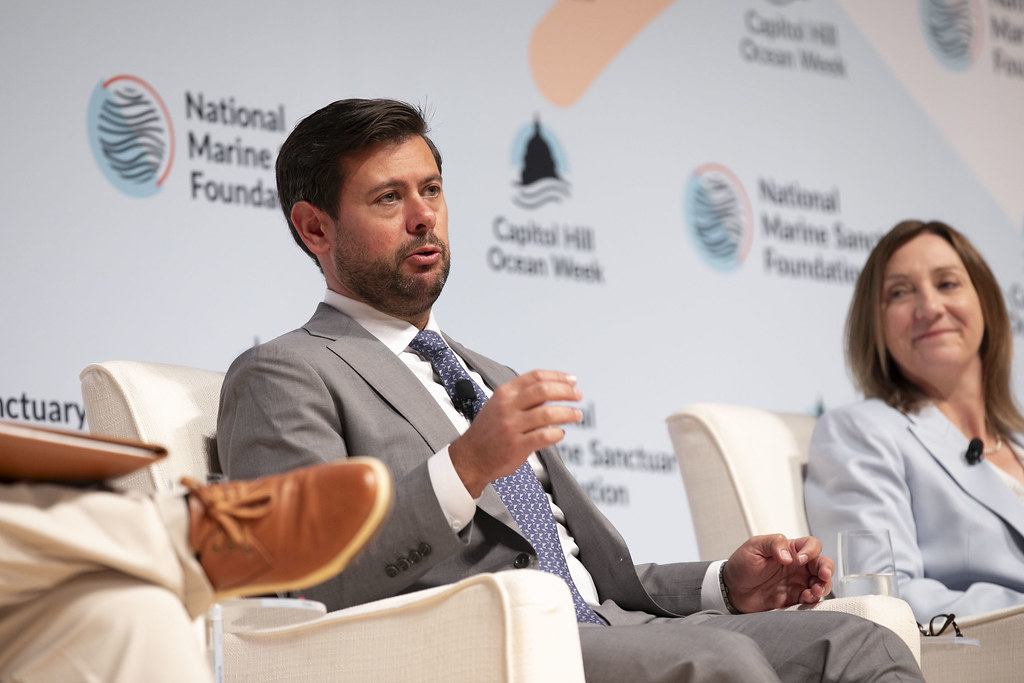


At Capitol Hill Ocean Week 2025, ocean conservation took center stage—but this year's conversation went beyond traditional environmental protection. The focus was on how innovation, particularly from the private sector, is creating practical solutions to complex marine challenges while supporting the sustainable use of ocean resources for economic growth.
Our Founder and CEO Eliot Horowitz joined a panel of marine industry leaders to explore how technology is transforming marine preservation. The discussion, moderated by Dr. Holly Bamford from the National Fish and Wildlife Foundation, brought together Aine Denari (Navico Group, Brunswick Corporation), Taylor Shropshire (oceanographer and founding member of Fathom Science), and Joshua Grier (Yamaha Motor Corporation) to examine the intersection of technology and conservation.
Here are key takeaways from the conversation:
1. The marine industry is ready for an AI transformation
With recent advances in hardware and technology aboard boats, the marine industry is already positioned for AI transformation. "There's a ton of technology on every new boat that we manufacture and sell today," explained Anya Dari from Brunswick Corporation. Modern boats come equipped with sophisticated electronics packages—multifunctional displays, cameras, radars, sonars, and sensors—that generate massive amounts of data. "Every new boat has an incredible electronics package, a lot of them powered by Brunswick that have tons of data coming off it, sort of just sitting on the boat wasted," Viam CEO, Eliot Horowitz, observed.
The challenge isn't hardware availability; it's turning that data into actionable intelligence. This presents a significant opportunity for platforms like Viam to bridge the gap between existing marine hardware and modern cloud, data, and AI technologies, enabling boat manufacturers and operators to unlock insights that were previously impossible to access.
2. Real-time data collection from boats creates unprecedented ocean intelligence
One of the most exciting developments discussed was the potential to make better use of the data that is already being collected on boats. "As connectivity gets better, we can take all this data that's on these boats, bring it to the cloud, and use it for really interesting things, whether it's avoiding whales or just understanding ocean weather better," Eliot explained.
This crowdsourced approach to ocean data collection creates opportunities that go far beyond individual boat operations:
- Comprehensive sea state monitoring and alerts across vast ocean areas
- Streamline compliance with automated International Maritime Organization (IMO) reporting
- Monitor and control fleets anywhere, even beyond cellular range
- Reduce unplanned downtime with predictive maintenance and anomaly detection
3. AI empowers mariners to contribute to conservation efforts
A key theme throughout the discussion was moving beyond regulation toward empowerment. As Taylor Shropshire explained, "There's some tension sometimes from the boating community or mariners that there's regulations which are important, but sometimes it doesn't feel like they're being given the opportunity to contribute also."
The solution lies in providing actionable information rather than restrictions. "You can't make people use data on the water, but we think it's responsible to at least provide people information about risk in their area so that they can make decisions that hopefully reduce that risk," Taylor noted.
Josh Grier emphasized the enthusiasm for technology adoption when it enables contribution: "I think that everyone really wants to do the right thing. So if we can make it as easy and as interesting for them as possible to do so, I think that's going to lead to the highest chance of acceptance."
This approach transforms ocean users from passive recipients of regulations into active participants in conservation efforts, creating better outcomes for both marine life and the boating community.
4. Edge AI processing enables real-time decision making on the water
A critical insight from the discussion was the importance of AI systems that can operate effectively at sea, where connectivity may be intermittent. As Eliot explained, "The AI we're using on boats is running on the existing hardware that was already aboard. It's not really big models being trained."
This "edge AI" approach enables:
- Real-time object detection and avoidance
- Immediate safety alerts and navigation assistance
- Continuous data collection even during communication blackouts
- Lower latency for time-critical decisions
5. User adoption depends on providing immediate, tangible value
Perhaps the most important takeaway was about technology adoption. Every panelist emphasized that marine technology users, from recreational boaters to commercial operators, will only embrace new systems if they provide clear, immediate benefits.
Eliot highlighted the importance of immediate user benefits: "We see really great adoption and excitement when there are tangible things that people get from implementing new technology. Whether it’s real-time sea conditions, real-time inlet depth, safer navigation, predictive maintenance or compliance."
Successful marine AI applications combine conservation goals with features that directly help users: enhanced safety, better navigation, improved operational efficiency, and superior weather predictions.
The future of ocean technology
The Capitol Hill Ocean Week discussion revealed an industry at an inflection point. The marine sector has the hardware infrastructure, the regulatory support, and the collaborative frameworks needed to deploy AI and data solutions at scale. This transformation requires true partnership between private sector innovation, government agencies, and community organizations, each bringing unique capabilities that are essential for success.
What's needed now are platforms that can rapidly bridge the gap between existing marine hardware and modern software capabilities. The opportunity is enormous: transforming every boat into an intelligent, connected system that contributes to both individual operational success and broader ocean conservation goals.
At Viam, we're excited to be part of this transformation, helping marine companies unlock the potential of their existing hardware while contributing to a more sustainable and intelligent approach to ocean stewardship.