This month’s platform updates make it simpler (and faster) to build smart systems that work in the real world. Here’s what’s new.
Fragment variables
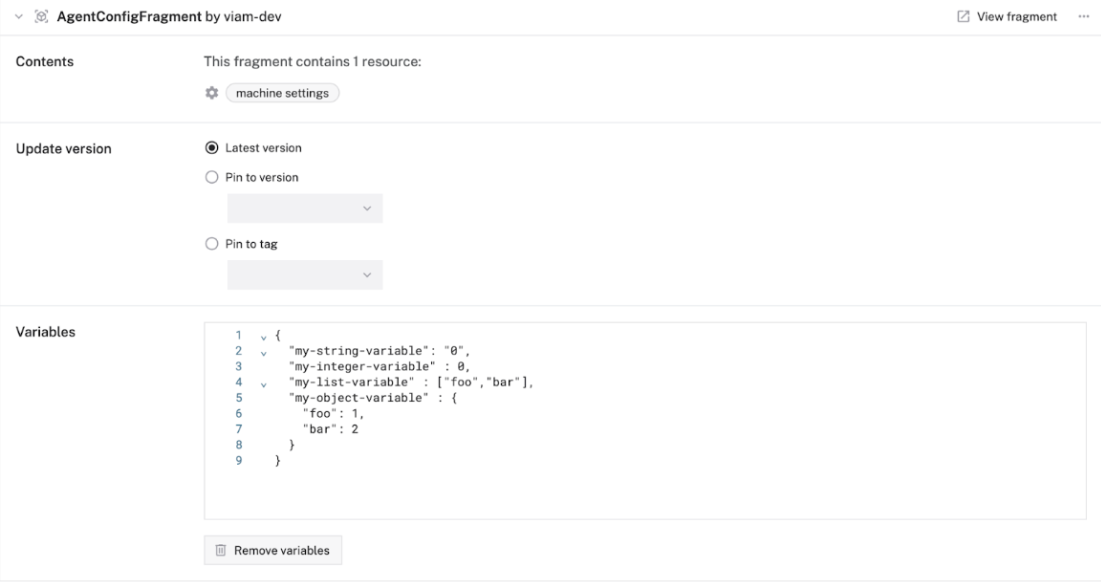
Fragment variables let you create reusable configurations with placeholder values. Define a fragment once, then reuse it with different values for IP addresses, names, or other parameters, eliminating duplicate configurations. Build complex configurations by combining fragments that use their own variables.
Reduce the number of overall fragments and need for fragment overwrites, plus encourage fragment reuse.
Fragment descriptions
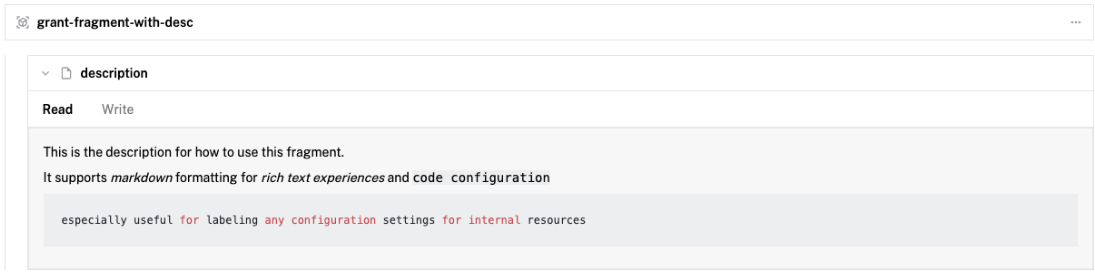
Add descriptions to your fragments to document hardware setup steps, dependencies, or any specific use cases, making collaboration smoother by ensuring everyone on your team understands each fragment’s purpose and requirements at a glance.
Document precise use cases, dependencies, and hardware setup steps without deciphering configuration.
Merge datasets in the UI
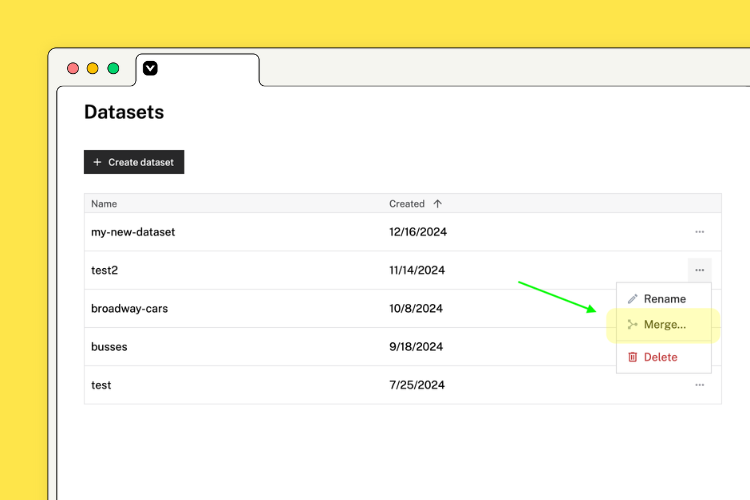
Combine multiple datasets directly in the Viam app, and run an iterative model training workflow: train on your base dataset, collect edge cases from the field, merge them together, and retrain for better accuracy. It's especially powerful when paired with the auto-labeling feature to continuously improve your models over time.
Viam multi-machine apps
Build Viam apps that connect to multiple machines at once, opening up possibilities for fleet management dashboards, multi-robot coordination, and cross-location monitoring. One login gives you access to all permitted machines.
TFLite model support for auto-labeling
We now support TFLite models, in addition to TensorFlow, for cloud inference and auto-labelling. Choose a model, set your confidence threshold, then review and accept or reject the generated annotations—skipping hours of manual labeling work.
Cross-platform module hot reloading
Develop on your Mac and hot-reload to a Linux robot without the painful build-deploy-test cycle. The new viam module reload supports cloud builds for true cross-platform compatibility, automatic component creation on first reload, and better environment variable handling. Python modules can even skip dependency reinstalls for faster iteration, and ~/Downloads is now the default home directory instead of /root/.viam.
Find us at our next event
Error! No upcoming events found. Please check back later!